“I take Auschwitz personally, because it is personal to us.”
Young Sinti visit the former Auschwitz-Birkenau concentration and extermination camp
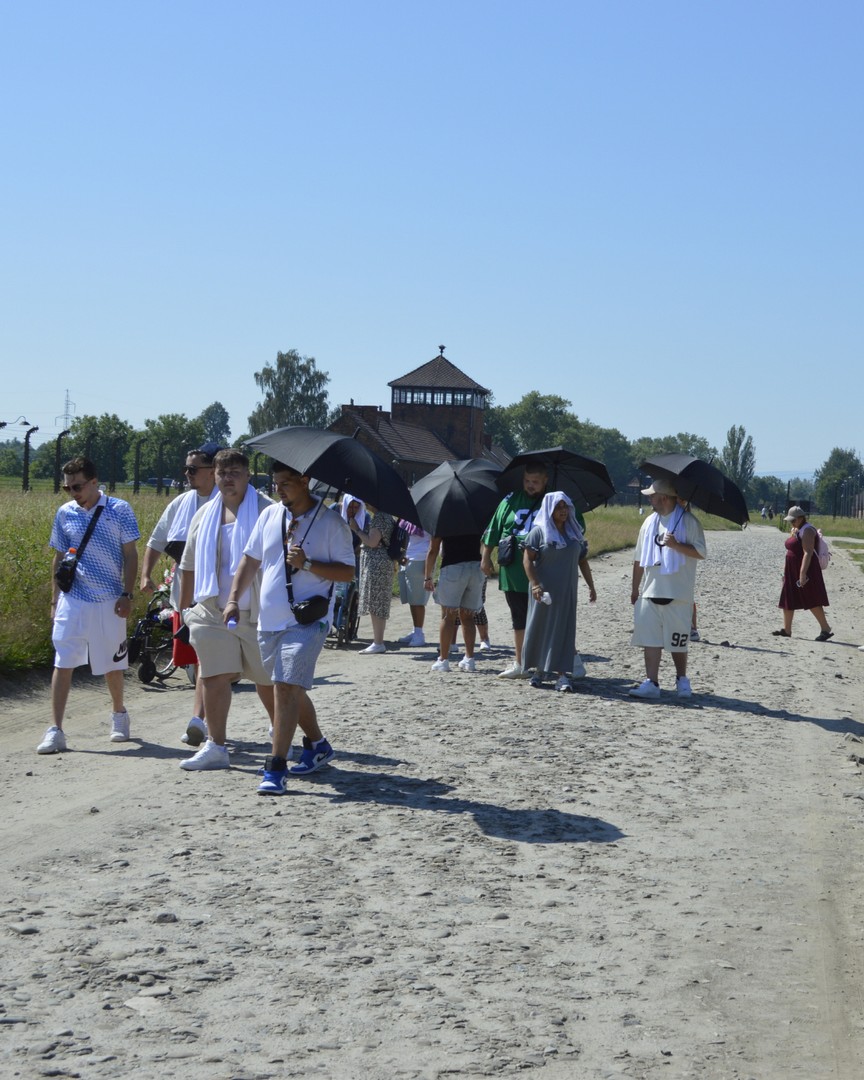
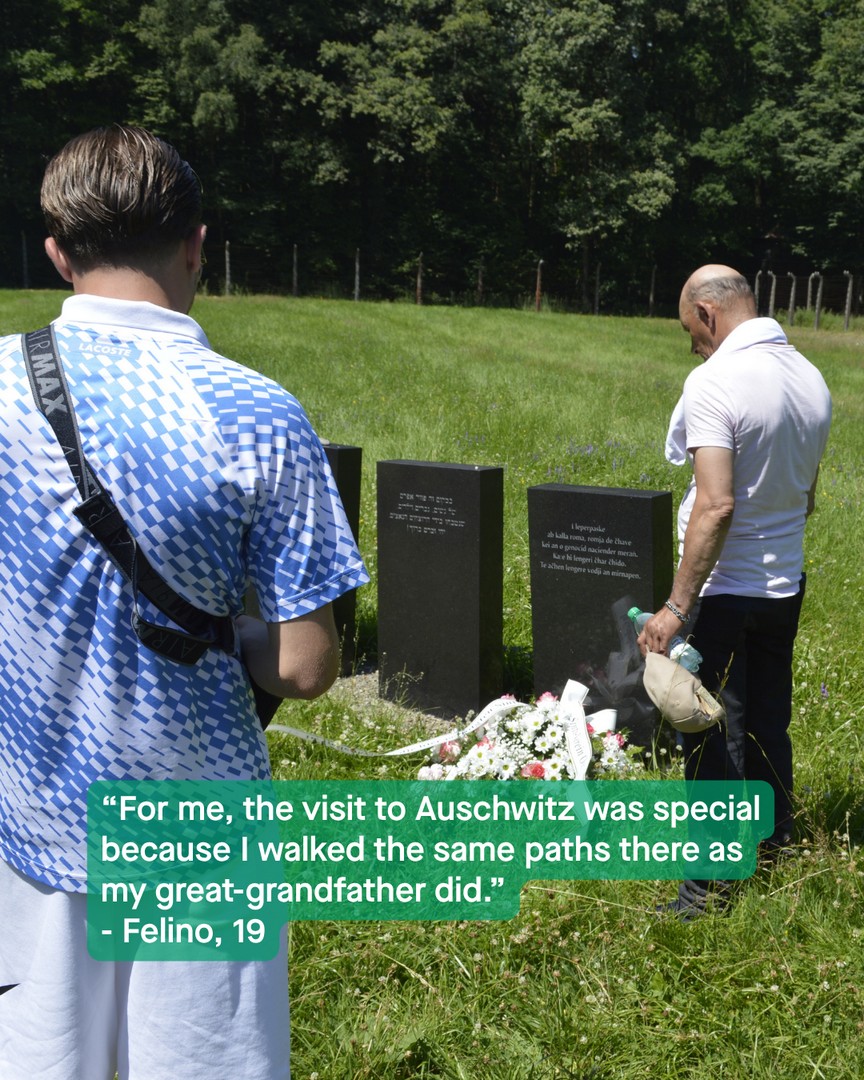
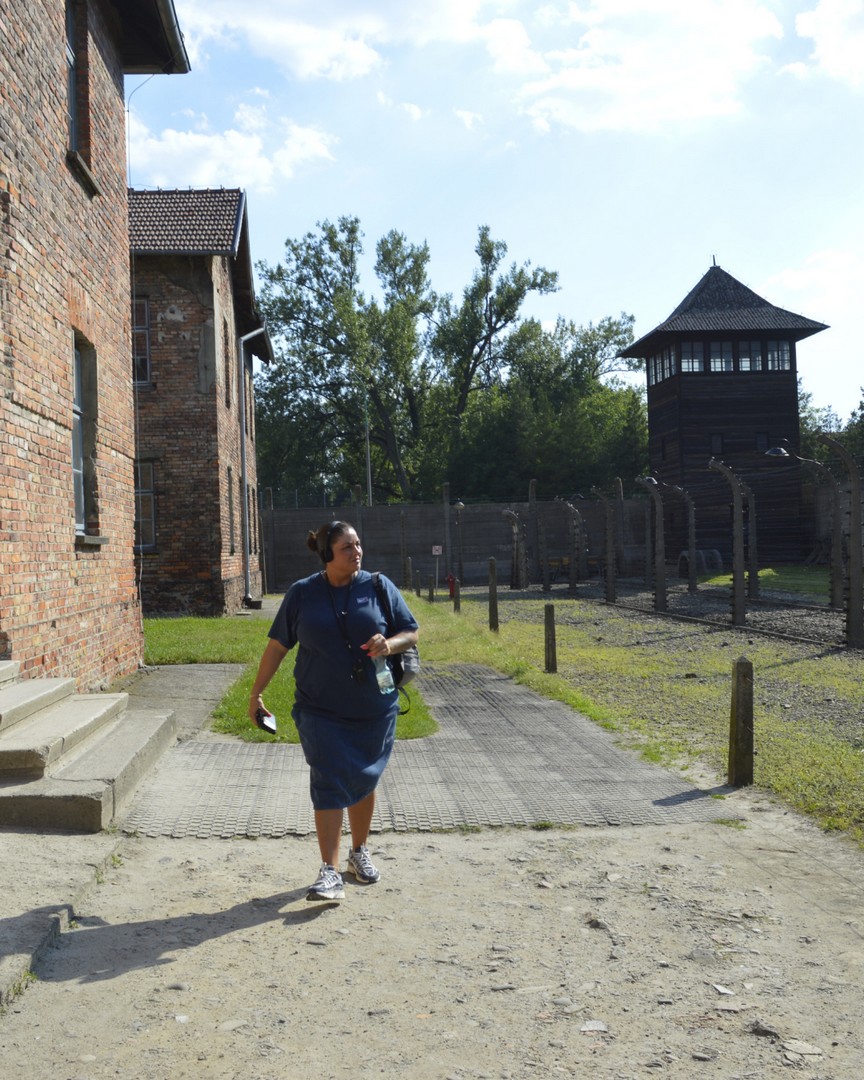
“For me, the visit to Auschwitz was special because I walked the same paths there as my great-grandfather.” Felino, aged 19, visited the former Auschwitz-Birkenau concentration and extermination camp in June 2026 as part of a group of young Sinti. The educational visit was organised jointly by Aktion Sühnezeichen Friedensdienste, the Internationale Jugendbegegnungsstätte in Oświęcim/Auschwitz and the 1. Sinti-Verein Ostfriesland. The focus was on the history of the Nazi genocide against the Sinti and Roma of Europe, and the continuities and consequences of antigypsyism after 1945.
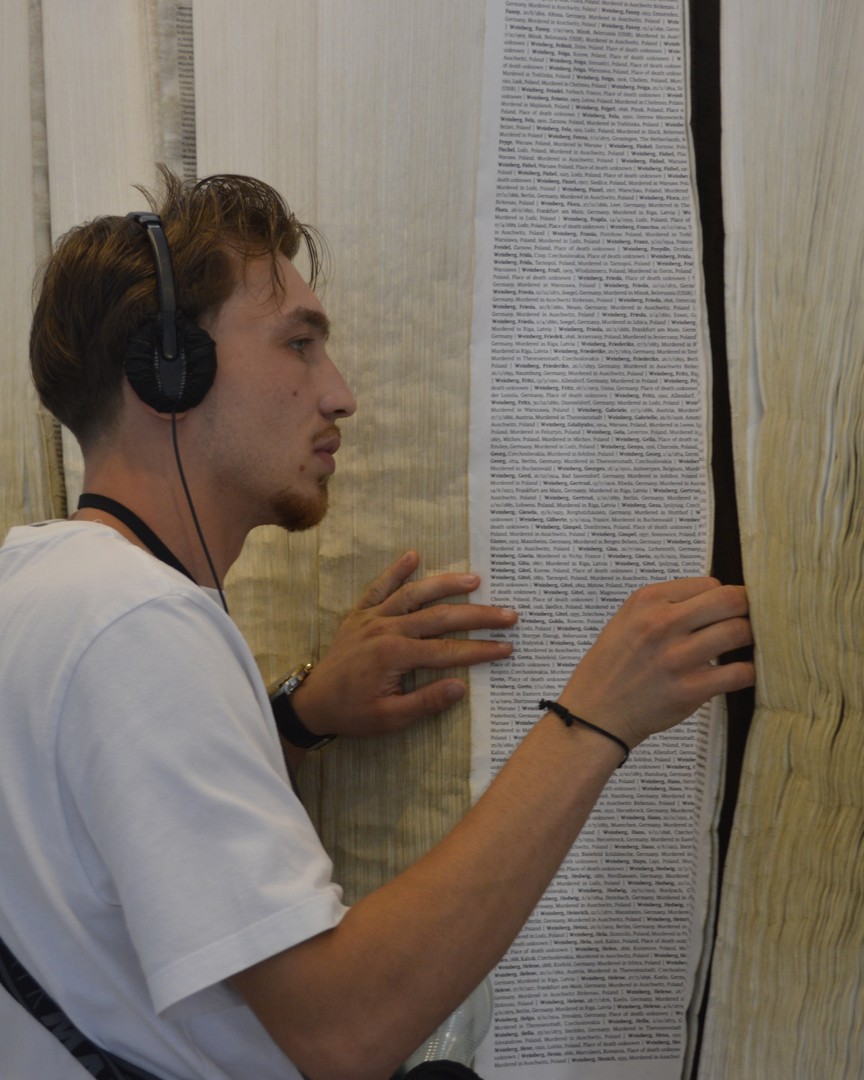
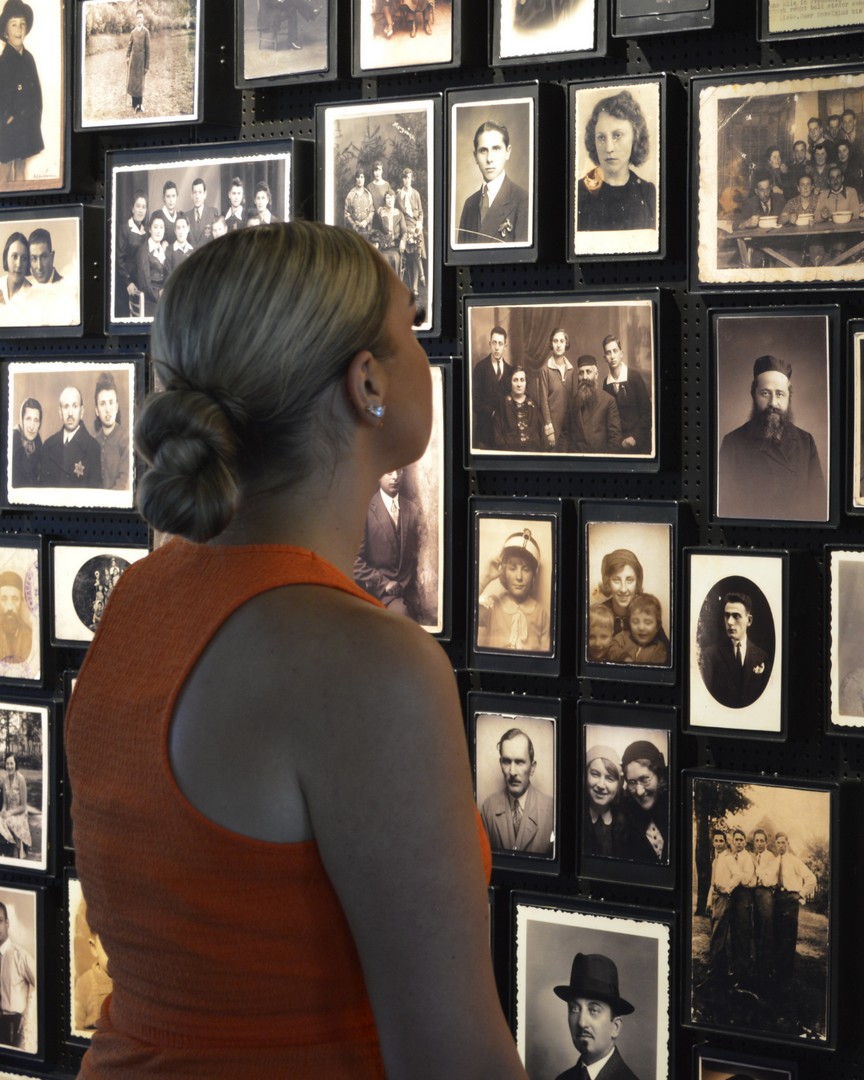
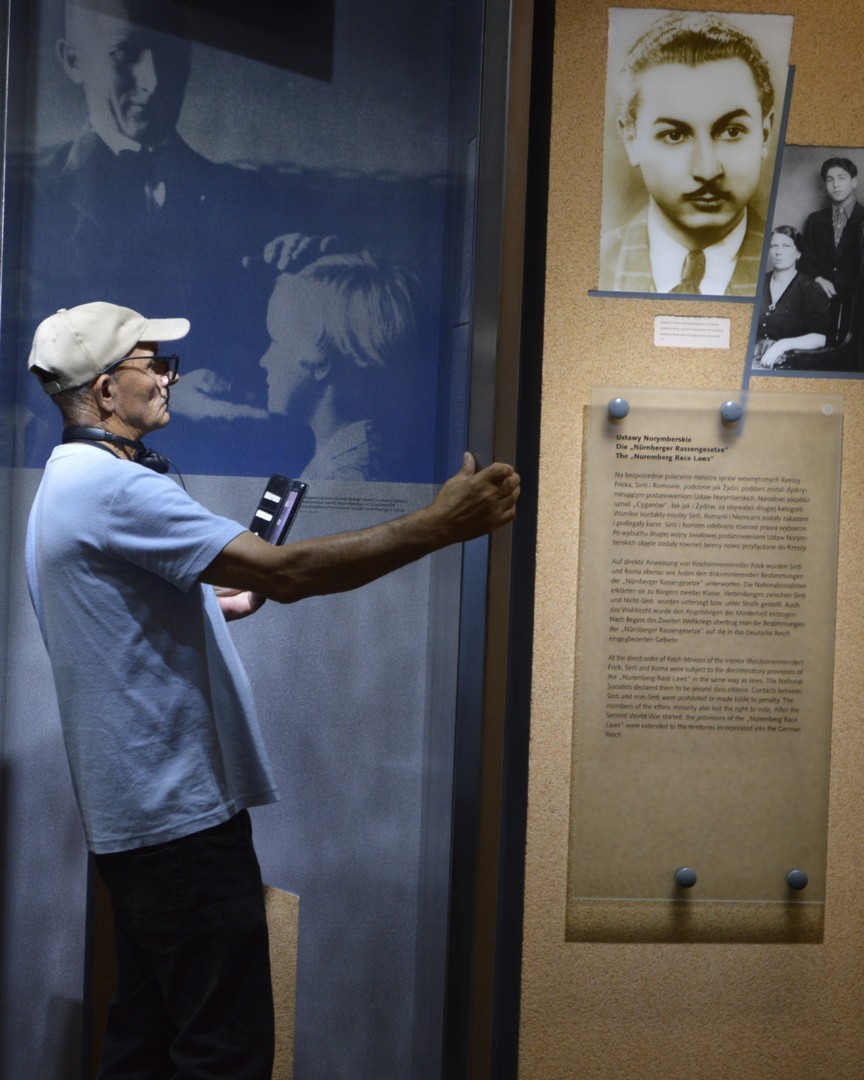
As part of the guided tour in the former main camp, Auschwitz I, the group also visited the exhibition on the genocide of the Sinti and Roma in Block 13. At the memorial wall, Felino discovered his great-grandfather’s name alongside many other names of his relatives. “My mother is proud of me because we are the first in our family facing our ancestors’ history. I’d heard a lot about the history before the memorial visit to Auschwitz, but it really is quite a different experience to be there in person. It is only because some of our ancestors survived that I am able to stand here today.”
The participants in the educational trip were young Sinti who are active in the 1st Sinti Association of East Frisia, Germany. They are descendants of Auschwitz survivors. As part of guided tours, the group visited the former camp sites of ‘Auschwitz I’ and ‘Auschwitz II-Birkenau’ and researched archive documents to trace the life stories of their relatives who were imprisoned and lost their lives in Auschwitz. In group discussions, the participants linked their own experiences to the history of their families’ persecution.
Across Generations
Norbert, aged 69, accompanied the group. Reflecting on the visit to the memorial site, he spoke about how the survivors' stories had stayed with him since childhood. "I once spoke with my cousin, he was already over 80 at the time, and we were sitting at the kitchen table when he said, 'You have no idea what we went through!' There I was, sitting next to an 80-year-old man. He had always been tough and serious. It was the first time I’d ever seen him cry. He sat there beside me at the kitchen table, and I asked, 'Cousin, what’s wrong?' And then he didn't say another word."
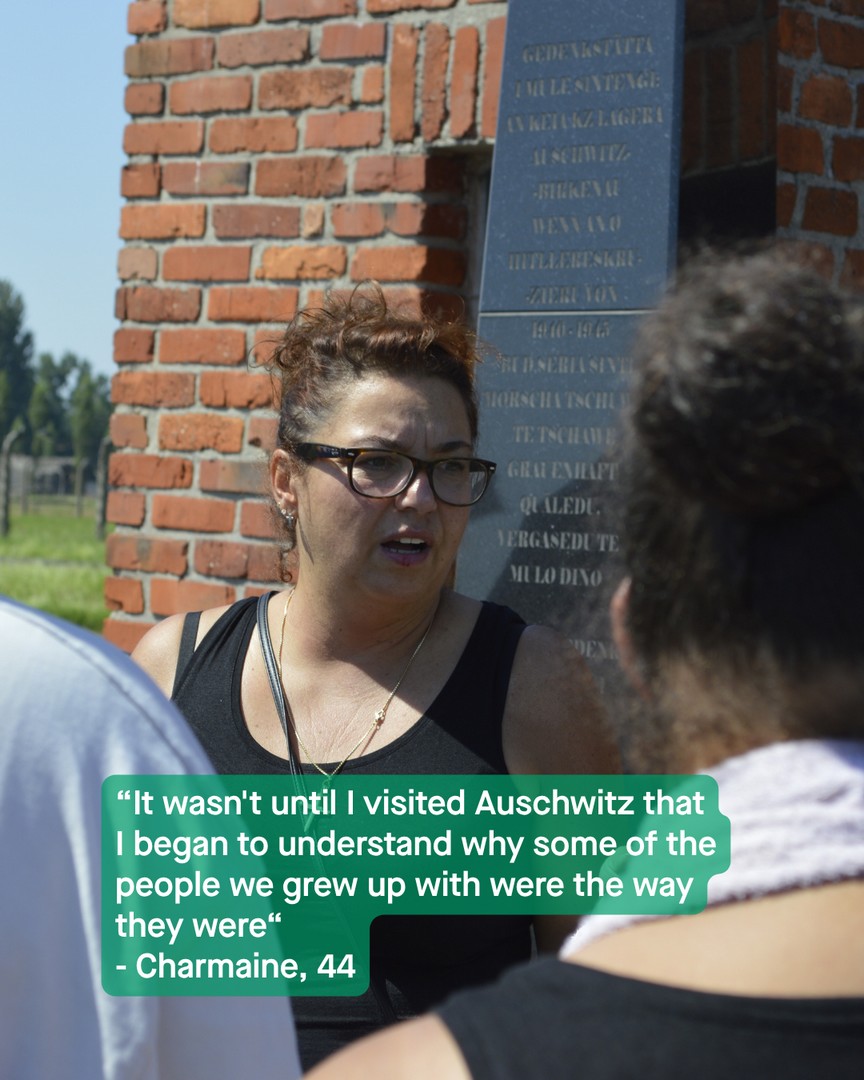
In the discussion groups during the educational visit, the transgenerational consequences for the descendants of the survivors were also addressed. Charmaine, aged 44, was deeply committed to helping organise the visit and, above all, she prepared the younger participants for the journey.” In the conversation, she reflected on the cross-generational experience: “Only about 5,000 Sinti returned from the concentration camps. And their struggle to survive did not end with the end of the war. They did indeed leave the camps, but still they could not live. The war was over, but for them it was not over. Only by visiting Auschwitz memorial, I do begin to understand why some of the people we grew up with were the way they were. The break in education caused by the ongoing antigypsyism after the war brought drastic consequences for the following generations.” Today, she says, it is her generation that is trying to build new stability: “We, the third generation, are beginning to rebuild our existences, our lives – it remains a struggle and always the fear that something like this, in some form, will happen again to our children, our grandchildren. In my opinion, every Sinto, every Sintezza has to have been here at least once.”
Continuities in antigypsyism
The participants contributed their own experiences, their questions and perspectives to the educational visit. In encounters with representatives of the Polish Roma minorities, discussions arose about remembrance, racism and European values today. In the conversation it became clear how relevant the engagement with Auschwitz still is. “On Facebook I keep reading: ‘How much longer do you want to keep talking about this topic!’” said Vanessa, aged 35. “We hear that again and again and it leaves me speechless. How are we supposed not to keep talking about Auschwitz, time and again?”
The memorial visit provided space for an in-depth examination of the current relevance and continuities of antigypsyism. Many participants reported everyday antigypsyism, hostility and attacks. At the same time, they pointed out how little is known about the history of German Sinti, how rarely the genocide is addressed in schoolbooks and in public.
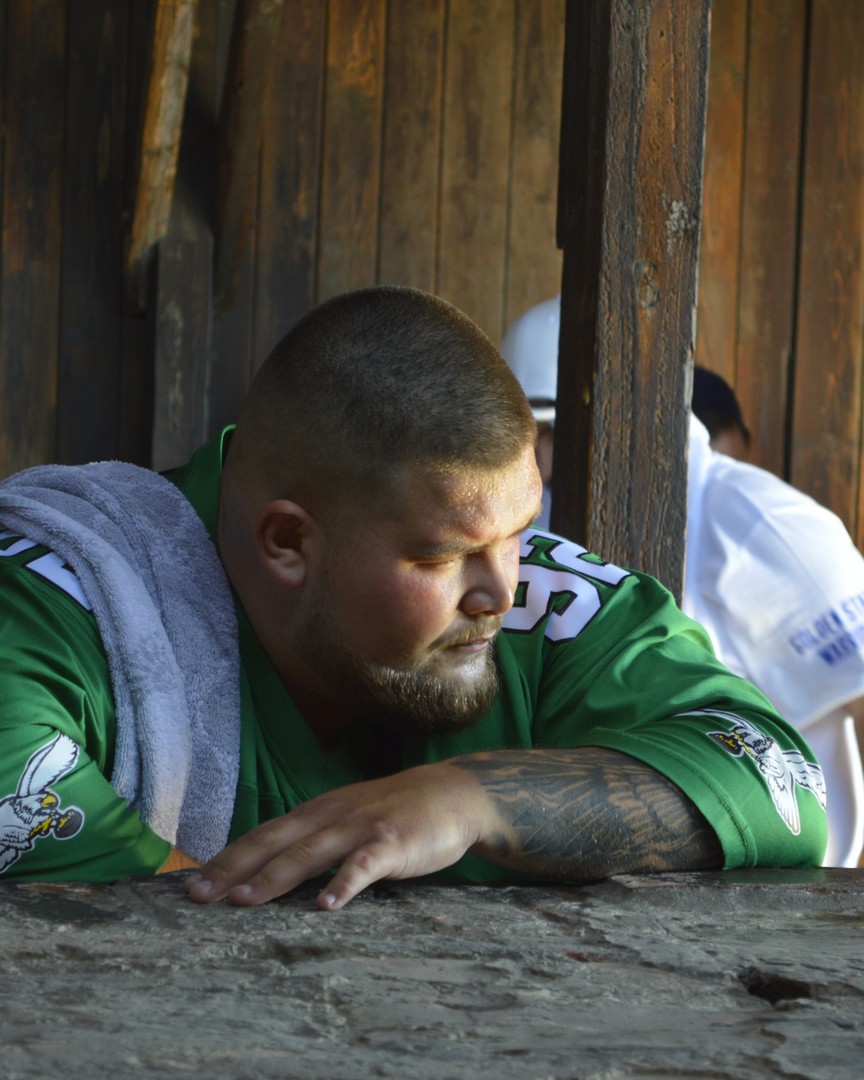
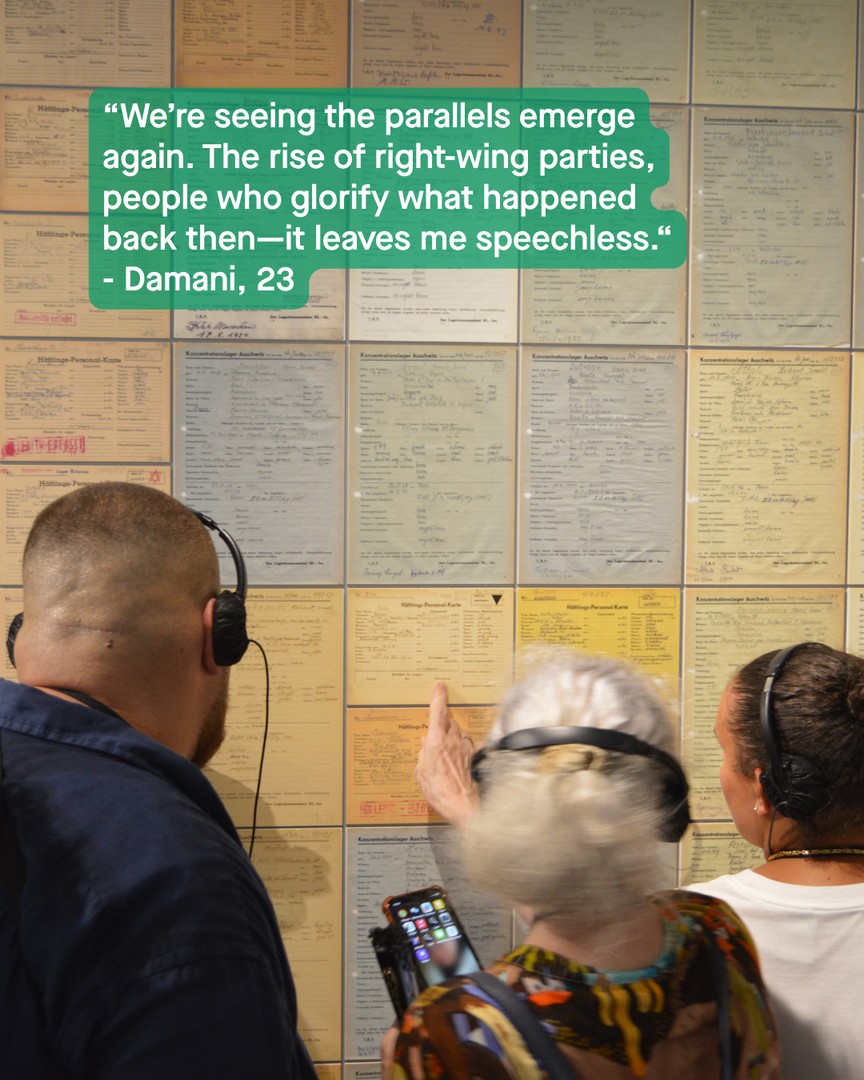
“In Birkenau it then became clear to me on what scale the Nazis had built this machinery of mass extermination,” said Damani, aged 23. “And I take it personally, because it is personal for us. We see the parallels resurfacing. The rise of right-wing extremism, people glorifying what happened there, that leaves me speechless. Antigypsyism and antisemitism are becoming stronger again nowadays. It suddenly feels so threatening again.”
Empowerment and engagement
The memorial visit made tangible what remembrance can mean when it is told from the perspective of those affected: it is not only a look back at the past, but a mandate for the present. The participants discussed with one another how they can process what they had seen and experienced and continue to stand up against antigypsyism and for democratic coexistence. Many want to pass on their experiences and insights from the educational trip to their families, in schools, in the neighbourhood, at work or on social media.
“I am glad that so many young people came along,” emphasised Norbert. “Hats off to the young people for having the patience and for coming with us to this difficult place. This is not just history. We must learn from it. And we want to pass on what we have seen today.”
-------
The educational trip was funded by the European Commission’s ‘Citizens, Equality, Rights and Values Programme’ (CERV), which also supports projects on gender equality, participation and the prevention of violence.

Funded by the European Union. Views and opinions expressed are however those of the author(s) only and do not necessarily reflect those of the European Union or the EACEA. Neither the European Union nor the granting authority can be held responsible for them.
Link an der Seite:
10 Perspektiven – Sinti* über Auschwitz, Widerstand und Selbstbehauptung in der Gegenwart https://10perspektiven.asf-ev.de/